Welcome to Dr. Chadi Murr

Rhinophyma or Nose Chronic Skin Disease – Surgical Procedure
Rhinophyma is the most advanced stage of Rosacea, which is a chronic skin disease that affects the face and specifically the nose. Rhinophyma, “nose growth” in Greek, is characterized by an abnormally large, thickened, bulb-shaped red nose caused by the growth of the oil-producing glands under the nose skin. In advanced cases, it can lead to difficulties in respiration and the diminution of the visual field. Men are more prone to developing Rhinophyma than women.Read More
The causes behind this disease are not clear but many factors like the excess of steroid hormones, vitamin B deficit, parasitic mites residing in the hair follicles and oil-producing glands of the nose, and even chronic alcoholism can lead to what is also known as “Whiskey Nose”.
Rhinophyma does not necessarily cause physical discomfort or pain, but since it disfigures the face, it can cause significant emotional consequences. People with this condition suffer from embarrassment and low-self image as they get asked about their condition and sometimes laughed at in public.
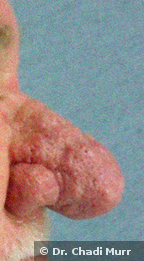
Am I a good candidate?
If you are still in the early stages of Rosacea, your condition does not need a surgical intervention and can be cured using oral and topical antibiotics, while following a special diet to prevent from developing Rhinophyma.
However, if you have already developed it, I will evaluate the severity of your case, as well as your general health status and pre-existing health conditions to discuss the surgical technique best suited for you.
How is it done?
The procedure consists of reshaping the nose by removing the excess glandular growth to restore a better-looking nasal shape. Over the years, many techniques have been used to correct this deformity including cold knife excision, electrocautery, dermabrasion and laser therapy. Laser excision is one of the best techniques as it does not involve bleeding or scarring. This procedure is best-achieved using CO2 laser and is usually done under general anesthesia in around one to two hours.
During this surgery, a focused laser beam is used to cut away the bulging skin. Then I proceed layer by layer, carefully vaporizing and removing the remaining tissue to finally reach the healthy superficial skin. If needed, a controlled dermabrasion is performed, which involves in removing the upper layers of the skin with a fast rotating wire brush.
Read More
This procedure not only gets rid of the excess glandular growth but also induces collagen remodeling and stimulates rapid wound healing and skin restoration (re-epithelialization).
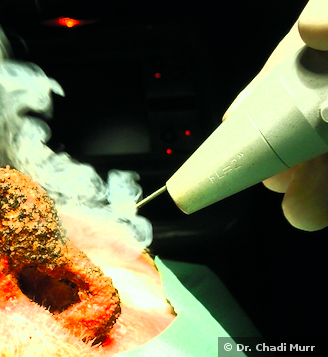
How long is the recovery?
Once done, the nose is covered with a special dressing to help reduce swelling and protect the wound. Following the surgery, it is recommended that the patients sleep in an upright position to avoid compromising the results. Patients can resume their normal lifestyle almost immediately while making sure to protect their face from UV rays.
The wound starts to heal 24 hours after surgery by re-epithelialization from the remaining epidermal appendages (hair follicles and oil-producing glands), just like skin burns normally heal. After three to four months, the collagen remodeling is complete, resulting in skin thickening and contraction.
You will be given specific instructions concerning how to care for your surgical site and what medications to take in order to relieve the pain and reduce the risk of infection. Be sure to ask all the questions concerning what to expect during the recovery period.
Disclaimer: The info presented on this page is indicative and for generic use only. Each patient’s case is unique and will be studied by Dr. Chadi Murr for full assessment.
Where is the procedure performed?
Rhinophyma correction procedures are performed in Lebanon. Consultations take place in Beirut, where each patient’s case is evaluated and the most appropriate surgical approach is discussed.
FAQs
What is rhinophyma?
Rhinophyma is a condition characterized by thickened, enlarged nasal skin, often associated with advanced rosacea.
Is rhinophyma treatable?
Yes. Surgical treatment can effectively reshape the nose and restore a more natural appearance.
Will rhinophyma come back after surgery?
Recurrence is uncommon, especially when underlying skin conditions are properly managed.
Does rhinophyma surgery leave scars?
Scarring is minimal, and techniques are used to preserve the natural contours of the nose.
Disclaimer: The info presented on this page is indicative and for generic use only. Each patient’s case is unique and will be studied by Dr. Chadi Murr for full assessment.